
Through Bolts & Side Bolts
Tie rods and side bolts in alloy steel with rolled threads and a stated tensile class.
The part where the process matters more than the price
Through-bolt fracture is one of the classic hydraulic breaker failure modes, and the difference between a bolt that survives and one that does not is usually the thread. A rolled thread has materially better fatigue life than a single-point turned thread, because rolling leaves compressive residual stress in the root rather than a cut surface.
We are explicit about this: where thread rolling is performed by a qualified partner rather than on our own equipment, we say so on the quotation. A supplier who is vague about this question is usually turning the thread.
Specification
| FIELD | UNIT | ORISE VALUE |
|---|---|---|
| Diameter range | mm | M27 to M56 |
| Length range | mm | 575 to 1160 through bolts · 230 to 510 side bolts |
| Thread form | — | ISO metric coarse as standard · UNC and UNF as drawn |
| Thread production method | — | Rolled |
| Material | — | 42CrMo · 40Cr |
| Tensile class | — | 10.9 standard · 12.9 where the original specifies it |
| Heat treatment | — | Quench and temper, hardness verified per batch |
| Straightness | mm/m | 0.3 |
| Surface protection | — | Black oxide standard · zinc plating or phosphate to order, 48 to 96 h salt spray |
| Torque recommendation | Nm | Supplied with the part where the model is known |
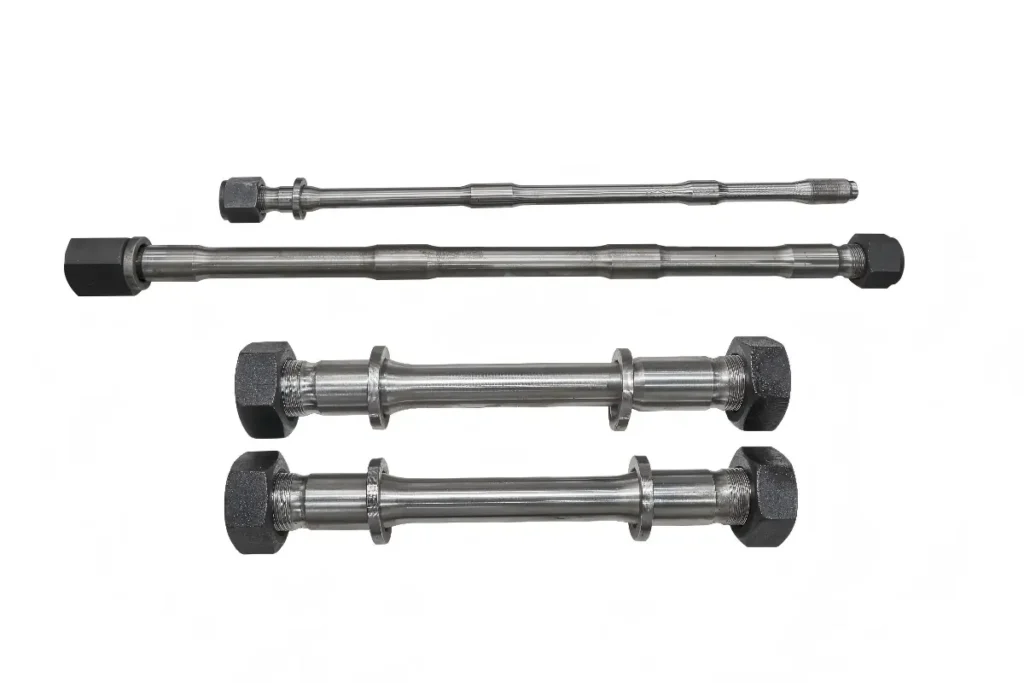
Always replace as a set. A single new bolt in a set of stretched ones carries a disproportionate share of the preload and fails early. We quote bolt sets by default and single pieces only on request.
Thread-rolled, by us or by a qualified partner. Through bolts are never single-point turned for this duty, because turned threads fail in demolition service. We confirm the supply route on the quotation so the answer is fixed before you order.
What we need from you
- Brand and model, and whether the bolt is a through bolt, side bolt or tie rod
- Overall length, thread length at each end and the thread form
- Old bolt if available, since fracture position tells us where the stress was
- Required tensile class if your specification differs from the original
- Whether you need the tightening torque published with the part
Send the part, the drawing or the model
A photograph with a scale rule and the machine model is usually enough to begin.